
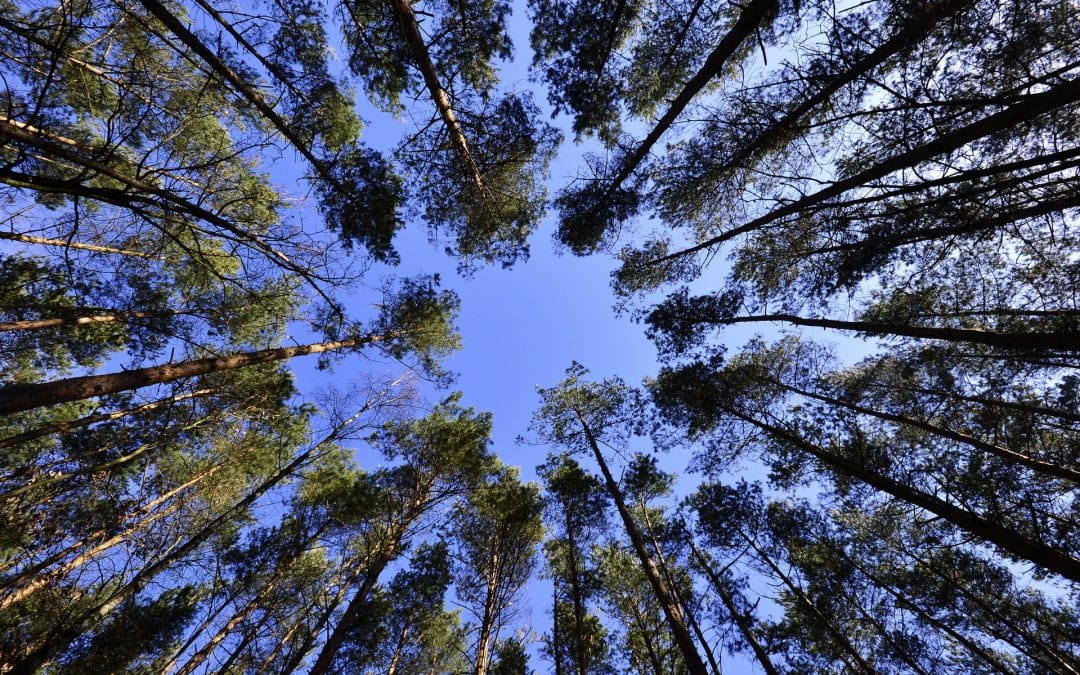
Nature is nurturing. Brain imaging research shows that a one-hour walk in nature decreases activity in the amygdala — the brain region central to threat detection, fear, and the stress responses that often stay elevated after trauma (Sudimac et al., 2022).
Trauma work can unfold in many settings: a therapy office, telehealth, somatic or EMDR sessions, couples therapy, or a mix over time. Whatever the format, healing usually asks a lot of your nervous system — staying present with difficult material, titrating arousal, and building new patterns when old alarms still fire easily. Time in nature is not a substitute for therapy, but it can be a powerful ally: it works with your biology by offering regulation, gentler attentional demands, and conditions that many trauma survivors rarely get indoors or in urban environments.
Why This Is About Trauma Work, Not a Specific Modality
Trauma-informed care is about helping your body and brain find enough safety to process what happened — or to grow new responses when words alone feel stuck. Whether you use EMDR, somatic approaches, parts-based models, or talk therapy focused on attachment, the same underlying needs show up: enough physiological margin to stay regulated, enough stability to stay oriented when shame or freeze arise, and enough cognitive bandwidth when trauma has taxed attention and memory.
Natural environments support those needs in parallel with formal therapy. They do not replace trauma-specific methods; they complement them — whether you step outside after a hard session, build green time into your week, or occasionally use outdoor space in collaboration with your clinician. Here is what the neuroscience suggests is happening — and why it may matter specifically after trauma.
Natural Stress Relief: Quieting the Brain’s Alarm System
After trauma, the amygdala can remain over-responsive: the same “alarm” circuitry that once kept you alive may fire too easily — in crowds, in quiet rooms, or when emotional material comes close. Functional MRI research found that walking in nature significantly reduces amygdala activity compared with an urban walk (Sudimac et al., 2022). For trauma survivors, that shift can mean more room to recover between sessions, to downshift after activation, or to approach inner work without living entirely in survival mode.
Mental Recharge: “Soft Fascination” When Hypervigilance Has Cost You Everything
Many trauma survivors describe chronic mental exhaustion — scanning for threat, rehearsing conversations, bracing for the next difficulty. Cognitive science describes this as the drain on directed attention: the effortful focus we use to filter noise and stay on task. Natural environments offer soft fascination — stimulation (light through leaves, birdsong, subtle movement) that captures attention gently, without demanding the same cognitive load as screens, traffic, and urban crowding.
When directed attention can rest, the prefrontal cortex — involved in perspective-taking, planning, and emotional regulation — is less depleted. In trauma work, that matters: you are not failing when you feel foggy after stress; your brain may benefit from conditions that do not force effortful focus before you feel regulated.
Breaking the Rumination Loop
Trauma and prolonged stress are tightly linked with rumination: repetitive, self-reinforcing negative thought patterns that feel impossible to interrupt. Research suggests that walking in natural settings is associated with reduced activity in brain regions tied to rumination — including the subgenual prefrontal cortex — compared with walking in urban environments. For some people, moving through green space pairs with a sense of forward motion that is somatic and simple — the body engaged in an orienting task while the mind is not trapped in the same closed loop.
A Cognitive Boost When Trauma Has Dulled Concentration
Trauma commonly affects attention, working memory, and the sense of mental clarity. Outdoor exercise research suggests additional benefit for the brain beyond exercise alone: a 2023 study reported that outdoor exercise was associated with enhanced neural markers of attention compared with indoor exercise — including increased P300 amplitude after just 15 minutes (Boere et al., 2023), a neural signal linked to attentional resource allocation.
That does not mean every insight must happen under trees — but it helps explain why some people notice a bit more clarity, presence, or spontaneity after time outdoors. Nature is not magic; it supports the cognitive and somatic state from which new connections can form.
Using Nature Thoughtfully Alongside Trauma Therapy
Spending time outside is not equally accessible or appealing for everyone. Weather, mobility, safety, sensory sensitivity, and trauma-related avoidance of open or isolated spaces all matter. If you and your therapist ever incorporate outdoor elements into care, it should be collaborative, with clear talk about boundaries, confidentiality, and what to do if overwhelm or dissociation show up. For some people — especially when dissociation, severe freeze, or suicidality are central — the structure of an indoor session remains the essential container.
Even when therapy stays indoors, informal contact with nature — a park, a garden, a quiet trail, light and air by a window — can still support the same nervous system that is doing trauma work. It is one way of putting biology on the side of healing between sessions and alongside evidence-based treatment.
Cynthia Routhier, MA, RCC is a Registered Clinical Counsellor at Emergence Counselling & Wellness. She works with individuals and couples using attachment-focused, trauma-informed approaches, including EMDR and Emotionally Focused Therapy. Cynthia offers therapy in English and French. Learn more about Cynthia | Thérapie en français
Sources:
- Sudimac, S., Sale, V., & Kühn, S. (2022). How nature nurtures: Amygdala activity decreases as the result of a one-hour walk in nature. Molecular Psychiatry, 27(11), 4446–4452. doi: 10.1038/s41380-022-01720-6
- Boere, K., Lloyd, K., Binsted, G., et al. (2023). Exercising is good for the brain but exercising outside is potentially better. Scientific Reports, 13, 1140. https://doi.org/10.1038/s41598-022-26093-2
https://shorturl.fm/t2xYU